

Specify a bottled water CIP system by drawing the paths that will be cleaned in place, naming the equipment outside each path, and agreeing on the records needed before production restarts. Begin with the treated-water supply, the filler’s product-contact parts, and the return or drain. Ask suppliers to quote those boundaries and the same definition of cleaning downtime.
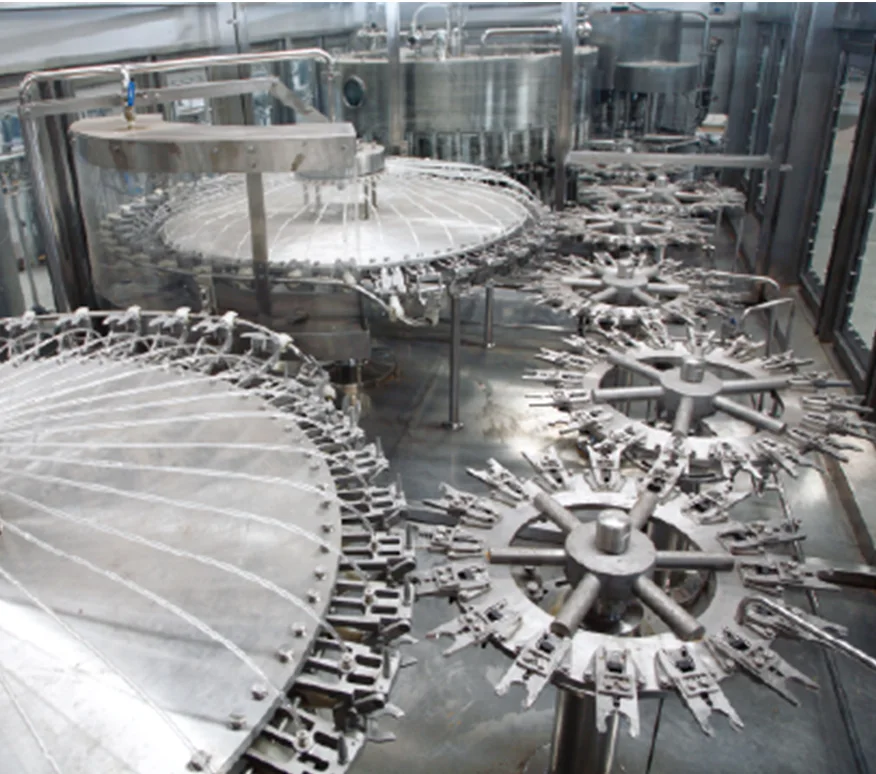
Start with the product path and draw the cleaning return
On a simple layout, follow water from the treatment outlet through any storage or transfer equipment to the point where it enters the bottle. Mark valves, sample points, branches and operating modes that can change that route. On a second copy, mark the proposed cleaning supply and return or drain. Give every line segment an identifier so the supplier’s diagram, equipment list and acceptance tests use the same names.
Where two suppliers meet, have each identify the exact tie-in point and the direction of the flows. A filler supplier may quote a connection at the machine while a site contractor owns the pipework from the water tank. Ask who provides isolation between those sections and who demonstrates that the valve positions selected for cleaning match the drawing. If a responsibility is open at quotation, assign it before placing the order or price it as a clearly named option.
ASG’s manufacturer catalogue lists its XGF and XXGF filling equipment for non-carbonated water, including pure and mineral water. ASG also lists CIP under product treatment. Use the two references to identify the required quotation work: ask what product-contact parts are covered by the project’s cleaning proposal and where it connects to the incoming treated-water system. The exact components, circuits and cleaning verification need written confirmation for the selected line.
Put each cleaning task in the right scope
Ask each supplier to return the same scope table with an owner, a drawing reference, and an acceptance record for every row. Use the scenarios below as prompts. Add an explicit line for work that is outside a bidder’s offer, even if another contractor already owns it. A simple connection schedule often reveals a missing return, a sample location hidden inside a machine enclosure, or a valve that is accessible only during installation.
| Area | Question for the quotation | Evidence to request |
|---|---|---|
| Water treatment and transfer | Where does the water-treatment supplier hand over? Who covers storage and pipes up to the filler, including branches? | Tagged drawing, isolation points, example records and ownership of each segment. |
| Filler product-contact circuit | Which surfaces and routes can be cleaned in place with the offered machine? How are return, drainage and sampling handled? | Matched diagram and equipment list, demonstration for the quoted configuration, and an example cycle report. |
| Containers, closures and exteriors | How will empty bottles and caps be handled? What separate steps apply to guarded equipment and external surfaces? | Written procedures, division of tasks and inspections that are recorded separately. |
| Shared utilities and controls | Can the existing equipment support the proposed cleaning schedule, and which party checks the utilities and control signals? | Utility schedule, control handoff, alarm handling and test responsibilities. |
Compare the full turnaround to released production
For line sizing, set the clock at the last conforming bottle before cleaning and stop it at the first conforming bottle after the agreed release checks. A useful timeline identifies preparation, the equipment cycle, controlled waiting, review of the results and restart losses separately. Also mark activities that can safely run in parallel under the approved procedure. Keeping these parts separate helps the buyer compare two proposed designs even when their cycle displays use different starting and stopping points.
Consider a hypothetical eight-hour shift with 30 minutes of packaging changeover and 60 minutes from the last acceptable bottle to the first acceptable bottle after cleaning and release. If those activities are sequential, the planned window is six and a half hours before other losses. If commercial planning requires 26,000 accepted bottles within that window, it requires an average of 4,000 accepted bottles per operating hour under those assumptions. A new quote should state how that becomes a verifiable result for the actual bottle, site and shift. Do not count restart rejects as finished stock.
Check what an extra product-contact branch, an additional filler, or sharing one cleaning system with a second line does to that schedule. Quote scenarios separately where there is a decision to make. Ask which extra valves, pipe runs, control changes, utility work, commissioning visits and verification services affect the price. Obtain the cost and time effects of putting those items in different contracts before deciding who supplies them.
Write the factory checks and site checks as separate evidence
Ask which circuits and alarms can be demonstrated before shipment. If the factory does not have your tanks, pipework, site materials or interfaces, list the representative connections that will be used and the checks that still belong on site. On-site verification should use the installed boundaries, the written water-plant procedures and the applicable acceptance plan. The plant’s qualified personnel should agree the operating criteria and approved evidence before a test begins.
Ask for a record that ties the equipment and circuit identifiers to the selected run, time stamps, relevant measurements, alarms and their disposition, changes to the procedure and the release decision. Define what happens when data are incomplete or a result fails the agreed criteria. Identify who can withhold release, who investigates, which tests repeat, and who signs the completed record. For commercial handover, also require the training outline, documentation language, maintenance responsibilities, recommended spare parts and the route for technical support after installation.
Have each bidder provide a one-page list of items that can stop release even when the cleaning cycle reports completion. Examples to discuss include an alarm that went unreviewed, a scheduled sampling step that was skipped, or a return path that differs from the drawing. Ask where the buyer can retrieve the evidence and whether it remains readable after a controls update. A buyer who owns some of the water-treatment equipment can use that list to find obligations hidden across two offers. The list also helps plant and equipment suppliers agree who should be called when a site check fails, and what information the plant should provide before that call.
Bottled water CIP questions buyers ask
Does a filling-machine quote normally include the complete cleaning circuit?
Request the drawing and equipment list for the offered scope. Have the supplier identify the connections, controls, utilities and plant pipework included, plus any circuits that remain under the buyer or another contractor.
Is the filler cycle duration enough to compare quotations?
Ask for the same last-good to first-good time boundary across quotes. Review preparation, waiting for release, and rejects at restart. Keep the machine cycle time as one line in that comparison.
Does CIP cover rinsing bottles or cleaning the outside of equipment?
Map those activities separately. Buyers should request each method, operator responsibility and sign-off record. Ask the supplier exactly which internal product-contact surfaces its proposal covers.
What should I send with the enquiry?
Send a process sketch, available water and utility information, storage and transfer equipment, filler model or required format, planned shifts and production target, and your proposed acceptance and documentation responsibilities. Include the drawing of an existing circuit if it will be reused.