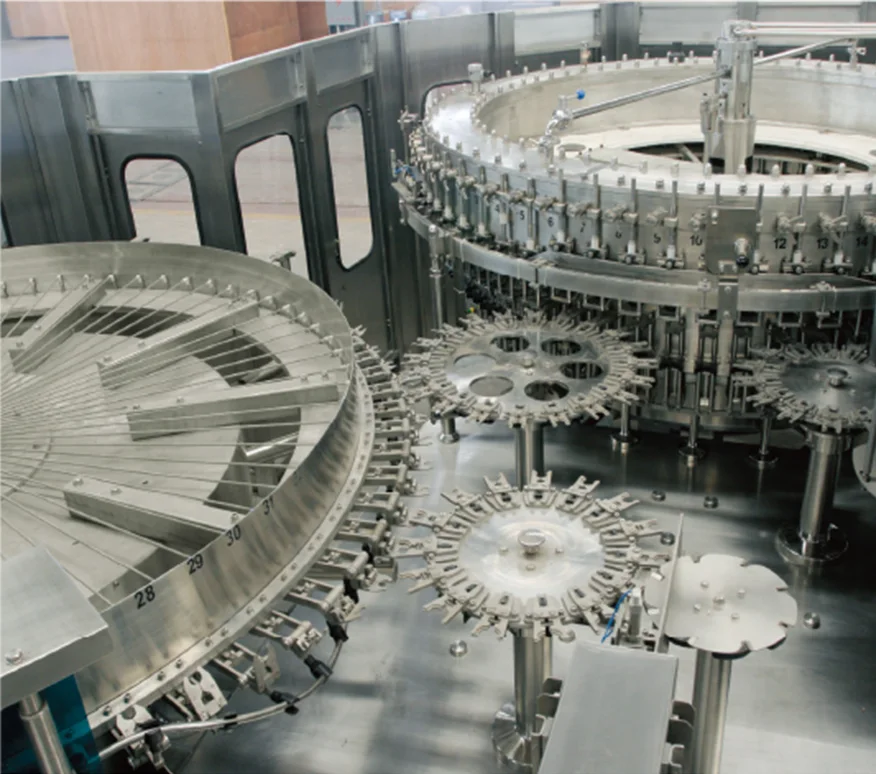

Test the lightest and most geometrically demanding bottles in your intended range from the bottle supply to the filler’s infeed. Give the supplier real bottles and dimensioned drawings. Ask for a witnessed trial with those samples, including a gap in the supply and a normal restart. Specify where to count accepted bottles and who is responsible for each transfer. A successful run on a supplier’s standard bottle leaves the other formats untested.
ASG lists its XGF/XXGF line for non-carbonated water and an LP series bottle unscrambler as separate catalogue entries. The manufacturer describes the LP equipment as arranging bottles for delivery into an air conveyor. For a line with separately fed empty bottles, write the agreed bottle source, conveyor path and filler receiving point into the quotation. Ask the supplier to identify which items and transitions are included for the proposed installation.
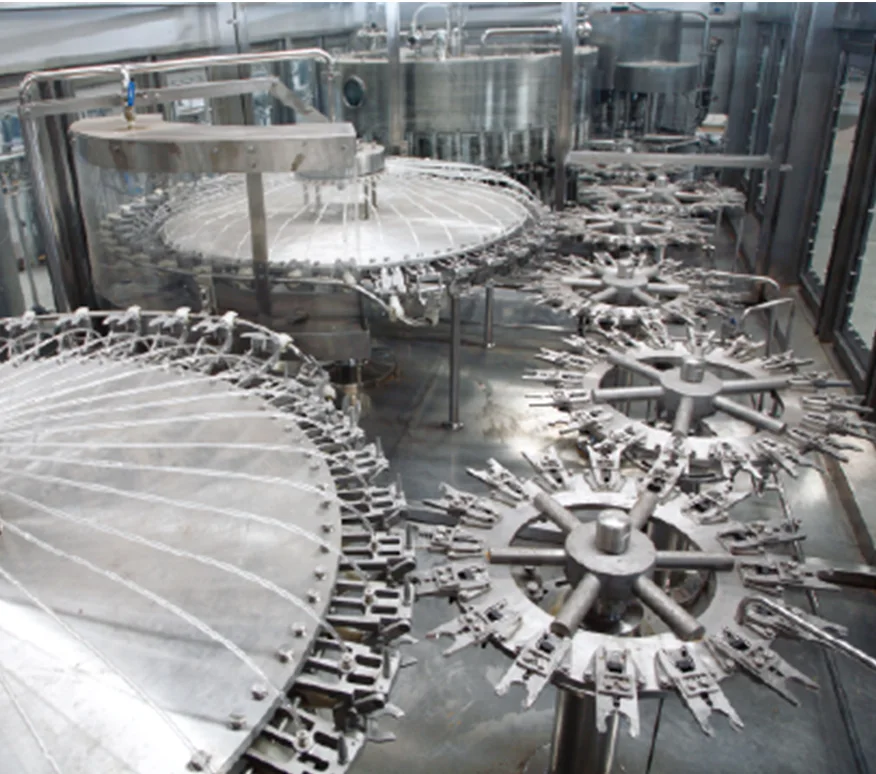
Which bottle samples should you send before layout approval?
Start with the bottle drawings that are approved for production. For a neck-supported conveyor, ask which part of the neck is supported, what ring and clearance dimensions are needed, and where the conveyor lets go of the container. Send the neck finish and support-ring dimensions, their tolerances, the full height and the widest body section. Include the empty bottle weight, the source of each sample and its drawing revision. Label the bottles so the team can match individual observations to the drawing and to the actual batch.
Include the shortest and tallest formats, plus any unusually light or flexible body. The bottle with the smallest volume may have a wide support ring, while a larger bottle may have a wider body or project farther from the ring. Select samples by the actual mounting and guide dimensions as well as by nominal volume. If the plant buys bottles from several approved suppliers, include examples from each drawing and record which source was demonstrated.
Prepare a marked sample and an unmarked sample from each batch if the line uses sensors to detect bottle presence. This lets the witness separate ordinary tracking marks from the bottles that represent normal operation. Ask the supplier to note any special feeding procedure used during the trial. The plant can then review whether its usual bottle source and shift routines can reproduce those conditions.
Where should you watch the transfer?
Ask for a drawing that follows the empty bottle from its entry to the filler. Mark where bottles are presented upright, where they are supported and guided, what happens at a change of direction, and how they enter the filler. Walk the layout with the people who supply the bottles, transport equipment and filler. Mark changes in guide height or bottle support so each party can see the equipment boundary it owns.
A camera pointed at the running filler may show a complete line without showing the missing detail. Ask for close views at the start of the air conveyor, before and after a bend, and at the last transfer into the filler. At each point record whether a sample enters cleanly, oscillates, tips, stalls, makes contact or is removed. Check whether the same bottle stays under control when a group of bottles arrives, followed by a gap.
What belongs in the purchase and trial checklist?
Agree on the checklist with the supplier before pricing the optional items. Use one record per bottle format and operating condition. Ask for a layout revision, a method and a result for every item you intend to witness.
- Sample identification — Record drawing revision, batch, height, widest body, support-ring dimensions and any handling exception for the sample.
- Operating conditions — Define the sample mix, target rate, run length, initial queue state and the point at which the filler is ready to receive bottles.
- Interfaces and change parts — List the source, conveyor, guide settings, transfer pieces and any format change parts by the supplier responsible for them.
- Interruption and release — Record what happens during low supply, after a deliberate short upstream interruption and when bottles next reach the filler.
- Accepted infeed — Count correctly presented bottles at the agreed receiving point. Record their disposition if a bottle is tipped, damaged or delayed.
How do you interpret a failed or partial trial?
Use observed changes to narrow the cause. If the stream is unstable only at a bend, ask to repeat the run with a camera there and another one at the next transfer. If the filler sees gaps but the conveyor before it remains full, have the suppliers review the receiving point and the agreed readiness conditions. If a specific bottle stalls repeatedly, match the stoppages to the sample and check the actual measured dimensions against the drawing and the guide setting.
For an illustrative example, suppose a supplier feeds 240 identified sample bottles. At the agreed observation point, 232 arrive correctly, 5 are removed before the filler and 3 remain on the path when counting stops. This accounts for all 240 bottles, with 232 accepted arrivals in that observation interval. Extend the observation or document the outstanding three before comparing quotes. Agree in advance whether acceptance uses a first pass, a complete observation window, or the result after a demonstrated correction. These numbers illustrate recording a trial. Each buyer and supplier sets the appropriate sample and acceptance terms for the project.
How should the trial affect the quotation?
Record the tested drawing revision and applicable formats on the quotation. Ask for a change-part list, settings and procedures for each format, plus the supplier responsible for each interface. Require separate identification of site conditions that the supplier’s trial cannot reproduce, such as longer conveyor paths and different upstream delivery arrangements. Put those checks in the site acceptance plan and agree who brings the production samples.
Use the bottling capacity guide to set a separate accepted-output test for the complete line. For a quotation, send ASG your bottle drawings, samples and infeed layout. Include the list of formats, how empty bottles reach the line, desired operating rate for each format and the observation points. Ask the supplier to show the exact path and acceptance scope in the reply so you can compare offers against the same inlet and outlet.
Common buyer questions
Do two bottles with the same filling volume use the same infeed settings?
Compare the drawings and samples. The neck support shape, body dimensions and empty bottle behavior determine what the guides and transfers must handle. Ask for each format’s tested settings and the parts used at the receiving point.
Can I use bottles borrowed from the supplier for the first trial?
Borrowed bottles can help show the proposed route and observation points. For acceptance, use identified production bottles from the agreed drawings and include all formats in the quotation. Record any format that remains to be demonstrated at site.
Should I test each format with a completely full conveyor?
Include the agreed normal queue and a low-supply condition. Observe how stable the path remains when bottles start arriving again. Record the last upstream point checked and the time and condition of the first accepted arrival at the filler.
Is the infeed count the output of the water filling line?
The infeed count measures correctly presented empty bottles at the chosen interface. A full line acceptance counts the finished units at the agreed end point after the specified filling, sealing and packaging checks. Put both observation points into the trial plan.