
Read the first item that enters the quoted equipment. If the supplier receives a formed empty bottle, the quote starts after bottle making. If the supplier receives a PET preform, look for preform handling, heating and stretch blow molding in the equipment schedule before treating the offer as a preform-to-bottle package. The label “3-in-1” is too short to establish either scope.
Start by tracing one bottle through the offer
Take the latest layout and draw an arrow from the agreed inlet to the point where the capped bottle leaves the package. On the inlet arrow, name what your team will hand to the supplier’s equipment. Write “formed empty PET bottle” if you buy bottles or already have a blower that will stay in service. Write “PET preform” if the quotation should cover making the bottle. Add separate arrows for the beverage and the closures, since they also need agreed delivery points.
Next, ask the supplier to name the first physical operation on the container and identify it on the drawing. A water filling machine can combine rinsing, filling and capping around a formed bottle. ASG lists its XGF and XXGF equipment for noncarbonated drinking water, with washing, filling and capping head entries in its published table. Use the quotation and the drawing to verify the exact arrangement for the model offered. ASG XGF and XXGF water filling equipment
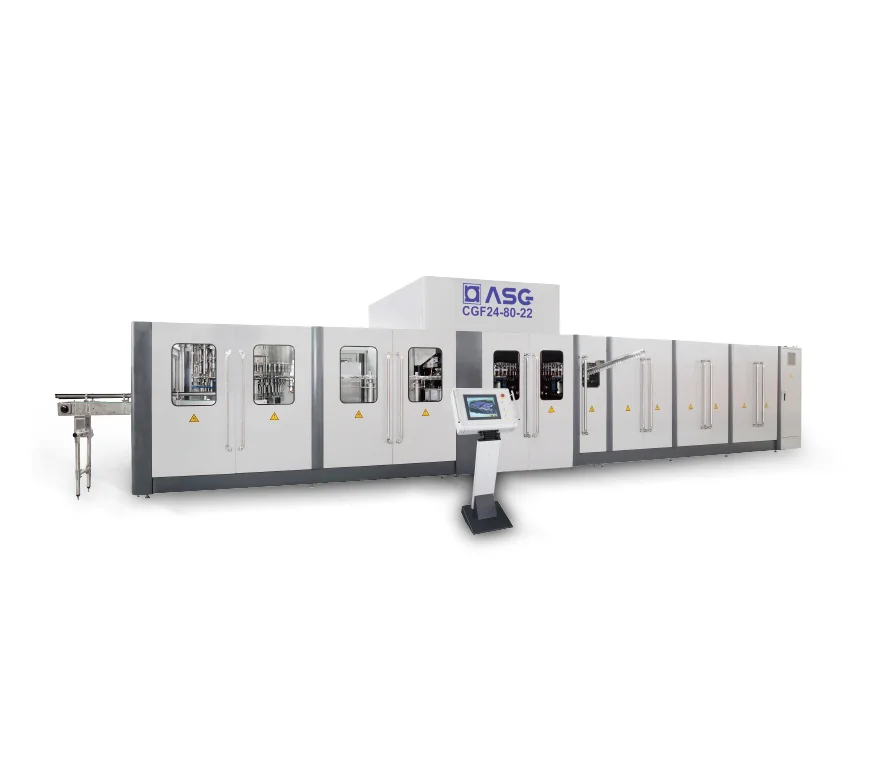
The ASG CGF equipment family is a different catalogue example. It combines rotary bottle blowing, filling and capping, with systems for loading, orienting and heating preforms. This gives a buyer a specific example of a blow-fill-cap combiblock. Confirm the inlet equipment, the transfer between stations and any separately quoted support equipment in the project schedule. ASG CGF blow-fill-cap equipment
Map the station that owns each handoff
Use the same scope sheet for each supplier. Mark each item “included,” “optional,” “buyer supplied” or “by another supplier.” Where the equipment crosses from one responsibility to another, record the exact location and the party that will prove the handoff works. The table gives you five rows to mark up before comparing a monoblock and a combiblock quote.
| Item to mark on the drawing | Quote starting with formed bottles | Quote starting with PET preforms |
|---|---|---|
| Container input | Show where formed bottles arrive and how they are oriented or received. | Show where preforms arrive and identify the loading and orientation equipment in scope. |
| Bottle making | Locate any existing or separately purchased blower outside this package. | Identify the heater, stretch blow molding station and agreed mold scope. |
| Transfer into filling | Locate the conveyor or other handoff and identify the owner of the connection. | Locate the formed-bottle transfer from blowing to filling and identify who supplies it. |
| Product, closures and services | Mark product and cap entry points, utility connections and responsibility for each. | Mark the same entries and establish air and cooling boundaries for bottle making. |
| Capped-bottle exit | Mark the physical discharge and the owner of the next conveyor or station. | Mark the same exit and list the work needed to connect it to equipment outside the block. |
A written description such as “conveyor by buyer” leaves a handoff unresolved unless the drawing identifies the point where the connection occurs. Ask for the transfer level and direction, the conditions for handing over the container, and the basic signals the equipment will exchange. Then assign installation and demonstration of that interface to a named party in the proposal. This is especially useful when the block supplier, conveyor supplier and plant team are all different.
Compare two orders against the same finished-bottle boundary
An existing water plant may already receive purchased bottles and have usable conveying ahead of its filler. The buyer can ask for a package beginning with formed bottles and ending with capped bottles. In the request, identify the existing conveyor, sample bottle and cap, and any transfer work the supplier must include. If an alternative offer starts with preforms, it changes what the plant must supply and which existing equipment stays in service. Ask the bidder to show those changes on a separate scope sheet before comparing the offers.
For a new project that will make bottles on site, specify that the intended supply begins with preforms and ends at a named capped-bottle discharge. A blow-fill-cap block may cover the central sequence, while the proposal still needs to list mold sets, air and cooling supply, product feed, closure handling and the connection to the next station. Ask for the split between equipment included in the block, support equipment supplied separately and services the buyer brings to the machine.
A separate blower and filler can also fit the preform-to-capped-bottle boundary when the connecting equipment and interface responsibility are included in the overall proposal. After the two offers cover the same inlet and exit, use the production and layout questions in the broader comparison. Combi or separate blower and filler buyer’s guide
Ask the factory test to demonstrate the boundary you bought
Put the inlet material and the capped-bottle exit in the factory acceptance test (FAT) plan. Agree who provides actual preforms or formed bottles and actual closures, which samples will be tested, and what evidence will show that the stated scope operates as proposed. If an existing machine, site utility or downstream conveyor cannot be present at the factory, record the interface evidence available there and what remains for site acceptance.
| Check | What the buyer should ask the supplier to show |
|---|---|
| Inlet sample | Identify the incoming preform or formed bottle against its drawing and identify the station that receives it. |
| Bottle formation, if included | Use the agreed preform and mold to make the named bottle, then check the agreed bottle characteristics. |
| Formed-bottle transfer | Show the path into the filling section and identify any test connection that differs from the planned site interface. |
| Beverage and closure inputs | Record the test product, closure and feed conditions, and list any substitutions for site confirmation. |
| Capped-bottle exit | Locate the discharge and show which agreed bottle and closure checks will be recorded there. |
| External interfaces | Identify simulated signals, temporary conveyors and test utility supplies so that the recorded result has a clear boundary. |
| Site acceptance follow-up | List each unresolved interface, its owner and the evidence needed when the actual equipment is connected. |
Ask for the signed test plan and the latest marked drawing together. If the factory demonstration starts from finished bottles but the purchased package is supposed to start from preforms, ask which test proves the bottle-making portion and how the transfer will be demonstrated. If a test setup cannot reproduce the handoff, record the gap as a named site-acceptance item. A table of individual machine test results is easier to interpret when each record states where the sample entered and left the equipment.
Frequently asked questions
Does a 3-in-1 monoblock always rinse, fill and cap?
The wording alone does not identify the operations. A particular water filling machine can combine rinsing, filling and capping around formed bottles. Confirm the three stations and the accepted inlet material in the proposed model’s scope and drawing.
Does “preforms in” mean that molds and air equipment are included?
It establishes the incoming package you expect the quoted equipment to accept. Request an explicit list of mold sets, preform handling, air supply and cooling equipment, and state who supplies anything outside the quoted package.
Where should I mark the end of the quote?
Mark a physical location on the layout, such as the capped-bottle discharge at the block or the point where bottles enter a named downstream conveyor. Identify who provides the equipment and signals on each side of that point and how the handoff will be accepted.
Can I use a factory demonstration with different containers?
Agree what the substitute can demonstrate, and ask the supplier to record the substitution. Reserve the format or interface checks that depend on your actual materials for a separate factory run or the site acceptance test.
Send ASG the inlet, outlet and drawings
Share the item you want to feed into the package, the bottle or preform drawing, the closure and beverage details, the equipment you plan to retain, and the exact point where you want to receive capped bottles. Ask ASG for a station list, a drawing that marks interface ownership and a draft acceptance plan for that boundary. Discuss your filling machine quote with ASG