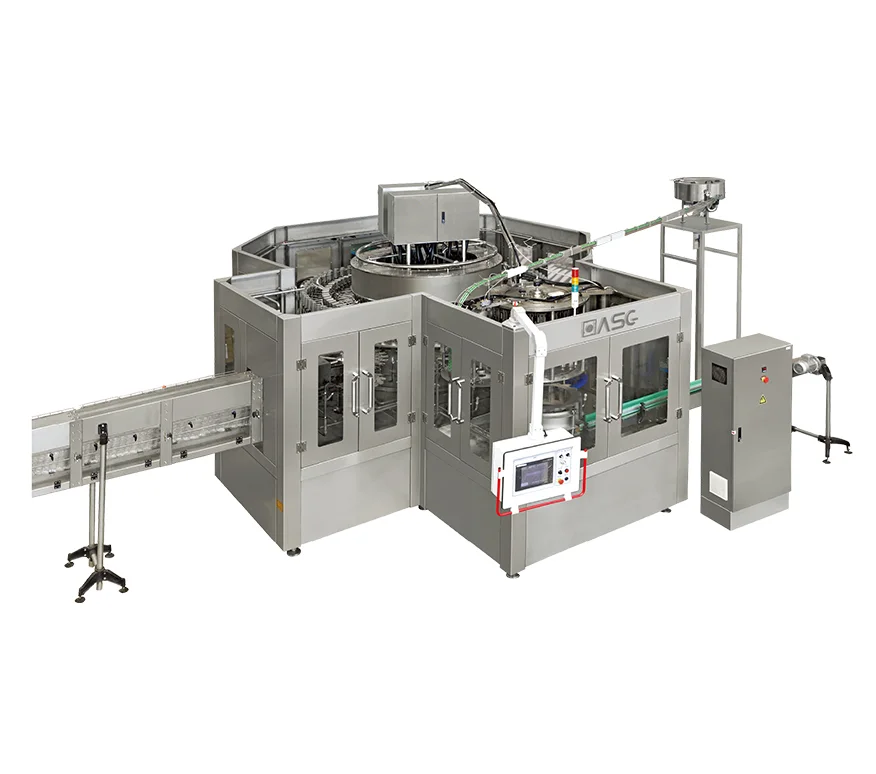

Agree how net fill quantity will be measured before accepting a filling machine trial. Use the intended product and container, record results for individual packs under stated conditions, and agree how those results will be judged. A mean close to the target can conceal a spread that matters to the buyer.
Jiangsu ASG Packaging Machinery Group lists the GF series in its volumetric filling equipment catalogue. Ask ASG to confirm the proposed configuration and its suitability for your recipe, packaging and measurement plan.
Define what quantity you are buying
State the target per pack and whether acceptance uses net mass or net volume. Identify the recipe, container and package components included in the weighing setup. If net volume will be calculated from mass, agree how product density will be measured or verified, the reference temperature and the calculation to use.
Agree the measurement method and the precision required from the equipment used to check the fill. Ask the supplier to record the instrument, its verification and any measurement conditions that can affect the comparison between samples.
Account for the empty package
If the check uses weighing, agree how empty-package mass will be deducted. If package weights vary enough to affect the decision, weigh and identify each empty package before filling so its own tare can be matched to its filled weight.
Use the same defined set of package components for the empty and filled measurements. If weighing takes place after capping, agree how the closure is accounted for. Record any shared tare value and the evidence that it is suitable for the test.
Take samples across the agreed conditions
Ask the supplier to specify the product batch and filling temperature, the container format, the planned line settings and the points in the run to sample. Sample after stabilization and agree whether the trial should also cover normal restarts or changes in running speed.
Where the proposed equipment and safe sampling method allow, identify the filler head or position for each sample. If samples cannot be traced to a position, agree how the trial will assess variation and record the traceability limit.
Review individual results before signing off
Agree the sample size, the acceptable range for individual packs, the rule for the sample mean and how any out-of-range pack will be handled. Keep the individual readings with their collection sequence, conditions and any available position identifiers.
Ask how adjustments and retests will be recorded. Keep the first set of results and label readings taken after an adjustment separately. Record the conditions actually demonstrated and list any recipes or formats still to be verified.
Send the supplier a test brief
- List the product, target quantity, unit, package components and proposed operating conditions.
- Describe the measurement method, tare approach and any density conversion.
- Agree the sampling plan, individual and mean acceptance rules, and who records the results.
- Keep the raw readings, the settings used and the scope of any retest.
Include the brief in your enquiry so the quotation states which trial conditions and results will be delivered.
ASG manufacturer reference for the GF series
Review the GF series volumetric filling equipment
Explore condiment filling line options