

Choose aluminum cans for a sparkling water program built around a single-serve, non-reclosable pack. Consider PET bottles when customers need to reseal the package or when the business already uses a compatible bottle and cap supply chain. For an equipment purchase, the decision comes down to which exact container and closure you can source, run and verify at the required output. Specify the can body and end or the bottle neck finish and cap before requesting a machine quote.
Compare the two packages as production jobs
Two packages with the same nominal volume can need different infeed, handling and closure tools. Start with the sales unit and distribution format, then work backward to the empty-container handoff. A brand shopping for a single-serve multipack may value a stable tray pattern. A brand selling a larger bottle for several servings may value a closure customers can reopen. Either buying brief should identify the actual container supplier and the intended distribution conditions.
| Buying decision | Aluminum cans | PET bottles |
|---|---|---|
| Empty package at infeed | Specify filled-package drawing, incoming empty-can pattern, can body and end drawings. | Specify bought empty bottles or in-house blowing. Send neck-finish, bottle and cap drawings, plus the preform drawing if blowing is in scope. |
| Closure equipment | Define end feeding, the double seamer and change parts for the body and end pairing. | Define cap sorting and feeding, the capper and change parts for the neck finish and cap pairing. |
| Evidence at release | Agree on seam inspection, samples by seaming head and the approved body/end supplier's limits. | Agree on closure torque when relevant, tamper-band condition, leaks and samples linked to the capper position. |
| Pack ready for dispatch | Confirm trays, cartons or wraps with the actual can footprint and pack-code position. | Confirm label or sleeve, wrap or case, and pack pattern with the actual bottle profile. |
Set a target for saleable packs at dispatch. A filled container that fails the agreed closure, fill or pack test doesn't count toward the saleable target. Make the loss record a part of the quote so that suppliers use the same counting point. Include what happens to a rejected pack and how an operator can trace the event back to the time and closing station.
Separate verified equipment from your requested line scope
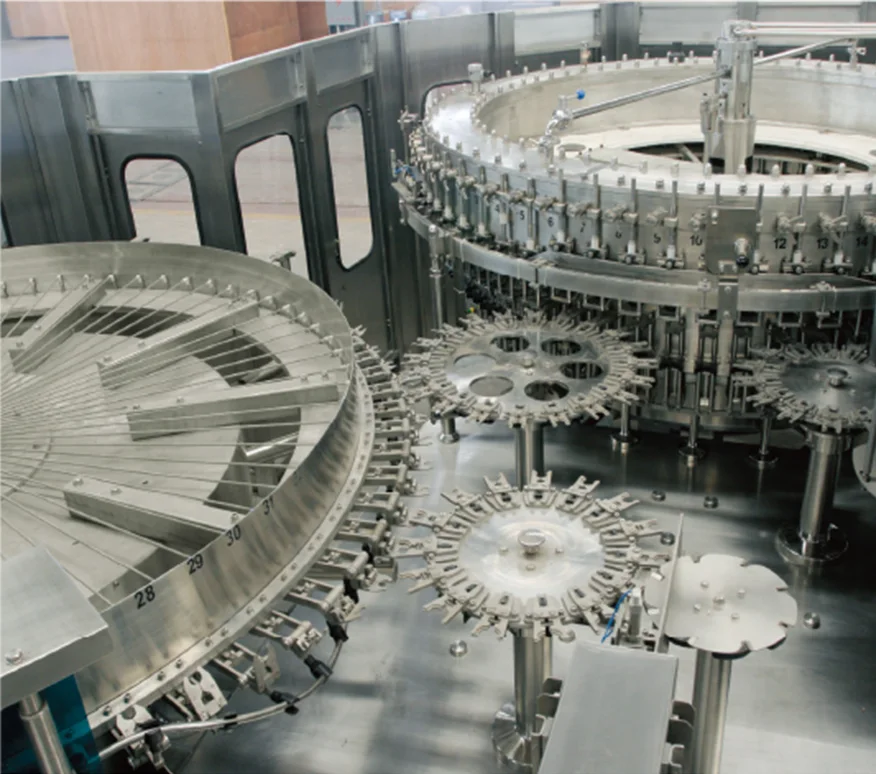
ASG lists the DXGF carbonated beverage filling line and shows distinct filling and capping stations in its equipment table. ASG also publishes a can filling and seaming demonstration. These references give buyers two concrete ways to describe the closing task. For a sparkling water canning or bottling project, ask ASG to check the selected package drawings, carbonation target and installed scope in writing. The demonstration does not establish compatibility with your can end, product or throughput.
Define what the upstream beverage equipment supplies to the filler. If you will use a separate carbonated beverage mixer, identify who supplies it and who verifies the product condition at the filler connection. On the package side, mark who provides empty-container delivery, container treatment, end or cap feeding, closure inspection, coding, conveyance, packing and reject handling. If a PET proposal includes a blower, request a separate interface line for preforms, bottles, compressed air, cooling and transfer. If it starts with purchased bottles, show where those bottles enter and how the filler receives them.
Give each proposal the same site information: usable floor space and access, utilities available at the line, planned operating shifts, and where the customer or another supplier will install equipment. Ask who will connect, commission and train for each major station, what documents and spares are included, and what needs to happen at the factory and on site before acceptance. List tooling for each launch format separately from tooling for formats you may add later.
Ask both bidders to mark the first point where they can see or count an unacceptable package. One proposal may include a reject station after the closure inspection, while another may require your team to supply it farther downstream. If pack integrity matters at dispatch, also ask that finished packs be checked after the case or tray operation. The same closure sample can pass at the filler handoff and still leave packing risks unresolved.
Normalize output before comparing offers
A quote for cans per minute and a quote for bottles per hour become comparable only after you turn both into saleable units at the same handoff. Use the same scheduled hours, accepted quality rules and pack definition. Record steady-running samples, startup rejects and changeover losses separately. When a proposal is for the filling block only, ask for the assumptions about the packer and other equipment that sit outside that block.
For example, suppose your sales plan calls for 24,000 saleable 330 mL units in a shift with six productive hours. That means 4,000 saleable units per hour at the agreed handoff. In a planning example with 96% of filled units accepted at that point, the line would need to fill about 4,167 units per productive hour, or about 69.4 per minute. These are arithmetic assumptions, not ASG equipment ratings. If you change the beverage, container, planned time or accepted yield, calculate again. If proposals use different container volumes, compare liters as well as units and report the volumes explicitly.
Ask for a trial on actual containers and closures, with the same beverage conditions on both lines. Record product temperature and carbonation at agreed sampling points and check fill and closure quality at the selected speed. Take segregated samples after startup, at steady running and after at least one restart. For cans, agree on the seam review method and component supplier's limits. For PET, specify the closure checks and the conditions under which a bottle is accepted. Agree on sample handling and the schedule for retained-pack checks. For more on distinguishing filling and closure effects, see the sparkling water bottling and foam-control guide.
Questions buyers ask
Can I order a can filler before choosing the can end?
Request a concept quote first. Before releasing tooling, confirm the can body, end, their drawings and supplier acceptance criteria. Agree on which samples must be approved and whether tooling changes affect the quote, delivery or trial schedule.
Can a PET line run several bottle volumes?
Ask the supplier to check each body, neck finish and cap combination. The line needs a confirmed handling and closure setup for each format. Request a written format matrix, change parts and a repeatable way to time changeovers.
Should seam and cap checks have the same pass limits?
Use one definition of a saleable pack, then specify separate closure methods and limits for each package. The approved can-end pairing and the approved bottle-cap pairing need their own samples, measurements and records.
What should be in the first request for quotation?
Send product type, target carbonation, each container and closure drawing, expected accepted output, pack pattern, available utilities and a list of equipment you already have. Identify the proposed handoff on both the beverage and package sides, and list the trials you expect before accepting the line.
Request comparable proposals
Send ASG your sparkling-water line requirements with the can and PET specifications you are considering. Ask for both proposals to name the incoming package condition, supplied equipment, accepted output and tests at the same handoff. That gives your production and purchasing teams a clear basis for comparing line scope.