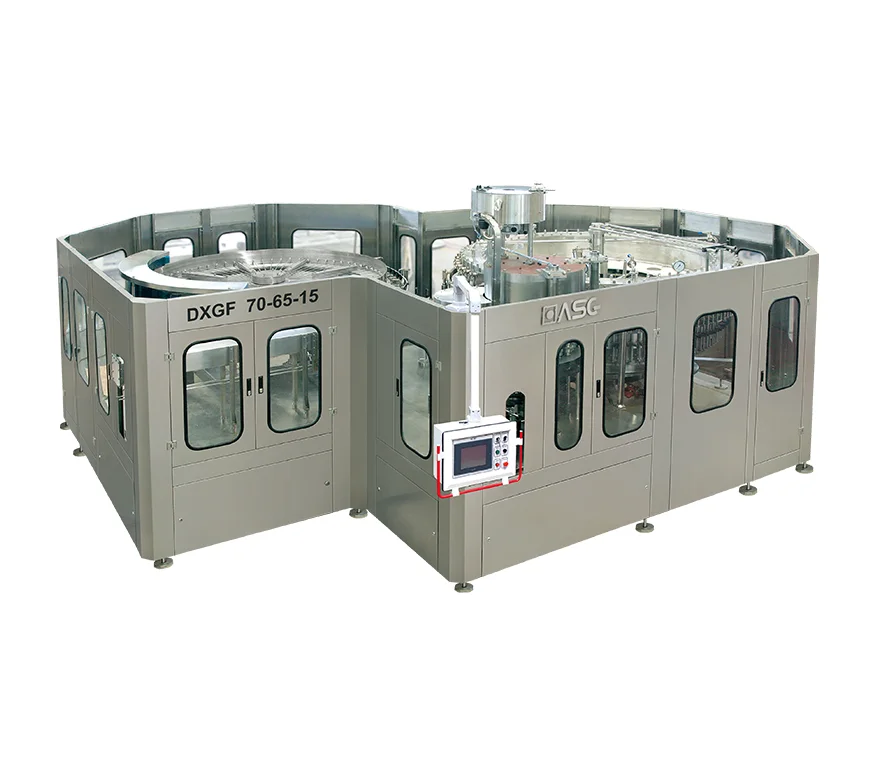

To control foam in sparkling water bottling, identify where it first appears. Compare the chilled product entering the filler, the open bottle as it leaves the filling stage, and the finished bottle after closure. Record product temperature, dissolved CO₂, line speed and stops on the same timeline. That gives you a way to compare filling lines and specify a trial with your carbonated water, bottle and cap.
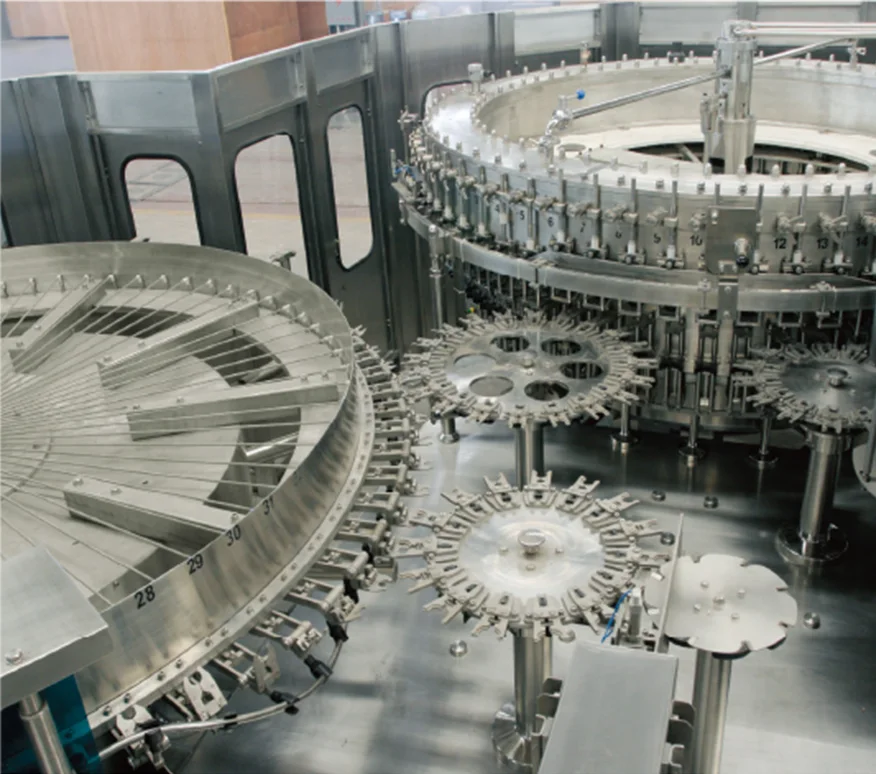
Locate the first change before adjusting the filler
Start at the liquid inlet to the filler. Ask the supplier where the temperature is measured and where product can be sampled safely. A value from the chiller display and a sample from a tank upstream describe different points. Both may be useful, but the acceptance report should identify the location, timestamp, instrument and conditions for every reading. If the liquid reaching the filler varies across otherwise comparable runs, investigate the delivery conditions before deciding whether to change the filling settings.
At filler discharge, observe the open bottle only from the agreed safe point. Record whether foam crosses the neck, reaches the closure area or coincides with low fill. In a trial where individual bottles cannot safely be followed, use a timestamped sample window and group the results by the operating condition that produced them. Record any change in the package or recipe in the same log. A video of an isolated bottle may show the symptom, but it cannot establish whether it occurred during steady production or just after a restart.
Then compare sealed bottles from those same windows. Ask for separate checks of fill quantity, closure integrity and dissolved CO₂. An apparently quiet bottle at the filler can still fail a closure or finished-product requirement. A foamy bottle can also pass some checks and fail another. Keep those outcomes in separate columns so a supplier can propose a remedy for the relevant failure.
Use matching observation windows during the trial
Before the trial, have the buyer and supplier agree how they will record carbonation. State the instrument, units, sampling method and how sealed samples will be brought to the agreed test condition. Use the same method for comparisons within each station and state explicitly when the inlet and finished-package measurements use different procedures. Keep bottles from the same recipe, format and run segment together, with the sampling time and conditioning details on the record. That allows both sides to interpret the result even when the test takes place later in a lab.
| First observation | Compare in the same run window | What to ask the supplier |
|---|---|---|
| Foam and low fill follow a pause | Inlet temperature and CO₂ just before the stop and after restart, plus the bottle count before normal operation resumes | Describe the approved restart procedure, where the first bottles go, and how rejects enter the run total. |
| Open bottles foam during steady output | Inlet readings, filler discharge, fill quantity and closure-zone observations at the quoted speed | Explain which filling and bottle-handling checks will help isolate the issue under those conditions. |
| Appearance varies with bottle format | Two separate format runs with agreed conditions, recording actual bottle and cap codes and the relevant speed for each | Identify the format-specific parts, setup and acceptance conditions included in the quotation. |
| Finished bottles differ after the same hold | Matched sealed samples tested after agreed conditioning, with separate fill, closure and CO₂ results | State how the trial will distinguish packaging or closure effects from variation before closing. |
Define what the quoted speed will deliver
Specify the exact sparkling water and the bottle and closure combination for the quoted rate. Plain and flavored versions should be listed separately if you plan to run both, with details of additives relevant to the filling trial. Ask how the count of conforming sealed bottles is collected and how pauses, restart discards, underfills and samples removed for testing are recorded. Agree on the observation duration and the baseline for each format. Where production includes scheduled stops, keep a steady-run result and a restart result. Both describe useful parts of the shift.
For a hypothetical trial, suppose one quotation offers a smooth steady run but excludes the first bottles after each restart from its records. Another records every restart bottle and identifies the point where fill and closure return to the agreed band. Request the same accounting from both suppliers before choosing. A floor supervisor needs to know how often rejects are handled and what signal authorizes release. A buyer needs comparable results at the discharge point where the order actually defines the finished bottle.
Ask the parties to agree on what should happen if a sample fails after the trial. Record who stores the bottle, who carries out the retest and what will trigger an investigation or a repeat test. A quotation might cover equipment only, equipment plus installation, or a coordinated commissioning scope. Ask which follow-up work and verification are included in each option, and which measurements or production materials the plant must provide.
Assign the interfaces in the quotation
ASG lists the DXGF and DGF families for carbonated beverages and separately lists its WYH carbonated beverage mixer. Use these catalogue entries to identify the relevant equipment when requesting a quote. Confirm the chosen model, how sparkling water will be prepared for your recipe, and the supply boundary for conditioning, carbonation, filling, closing and checking the finished package. A separate item in the catalogue does not establish what is included in a project quotation.
Indicate whether you will supply existing water treatment, cooling or carbonation equipment. Ask for the expected product conditions at the point where the quoted machine connects, the minimum information needed to check an existing system, and the party responsible for instrumentation and commissioning. Have the supplier list which bottle and cap sizes are included in the base price and which tools, test materials or extra format runs affect the quotation. Attach your bottle and cap drawings, target CO₂ and measurement units, planned shifts, anticipated stop patterns and the point where conforming bottles are counted.
Agree on sign-off at the factory and at your plant
Write down what the factory can test with the buyer’s product and packaging. If the factory uses substitute water, bottles or caps, list those substitutions and identify the acceptance checks they cannot demonstrate. Reserve the affected checks for the site and make clear who supplies operators, utilities, measuring equipment and samples. Record the responsibility and sign-off date for each open item. A short shared test sheet covering inlet readings, operating windows, packaging codes, finished results and follow-up gives purchasing, operations and the supplier a record they can all use.
Sparkling water bottling FAQ
Can we pick a filler using only the target CO₂ level?
Use the target and its units together with the planned temperature range, ingredient list, bottle and closure, and production rate. Ask the supplier to state which of those conditions the quoted trial will verify.
What if foam only appears after a brief stop?
Compare readings on both sides of the stop and record the first conforming bottle under the agreed checks. Keep restart discard counts apart from steady-run rejects so you can size the loss for your operating pattern.
Can we compare the open bottle and finished CO₂ with one test?
Use separate observations tied to the same operating window. Observe the bottle before closing, then test labeled sealed samples under the agreed conditions. Report fill and closure results separately from dissolved CO₂.
Which information makes a sparkling water quotation easier to compare?
Give each supplier the same recipe list, packaging drawings, target carbonation, inlet and site conditions, expected output and proposed acceptance point. Ask each to return a supply-boundary list and a test method for every quoted format.