

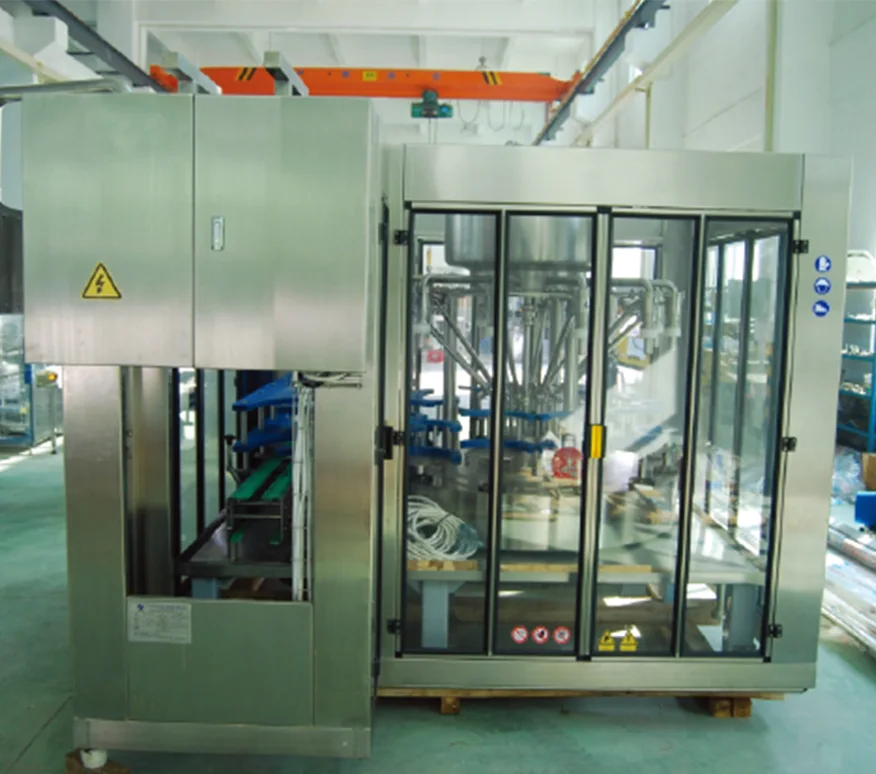
A 5 gallon water filling machine can also run 3-gallon jugs if the ordered line is configured and tested for both exact containers. A series listing that names both capacities supports a two-format inquiry. Ask the supplier to identify the parts and settings for each jug, show how it passes through every included station, and demonstrate a successful changeover in both directions.
Start with the ASG TXG 3- and 5-gallon water line and the 5-gallon water filling machine buyer’s page. Jiangsu ASG Packaging Machinery Group lists the TXG series for both formats. Its catalogue also describes separate auxiliary equipment such as a cap puller, inside and outside barrel scrubber, cap elevator and heat shrinker. Ask which items the supplier has included in the quotation and which configurations have been checked with your samples.
Which jug dimensions should the supplier compare?
Send a dated drawing and a physical sample for each format. Mark the overall height, largest body diameter, neck finish, shoulder profile, base shape and target fill volume. Include the size and position of the handle if it projects into the path of a guide or gripper. Ask the jug supplier for dimensional tolerances and identify the points used to locate the jug. Drawings and samples should carry the same revision and a simple identifier that can be used on the quotation and test record.
For each station, ask the supplier where the jug is supported and what controls its position. A change in body height can move the opening relative to a brush, nozzle or cap head even if the nominal neck diameter stays the same. A change in the shoulder or handle can affect how an empty jug moves from a conveyor into a fixture. Where a station depends on the base or shoulder, ask for a check with representative samples at the limits of the declared tolerance, where such samples are available.
Supply the drawing for each cap, including the features that retain it, together with unused samples for feeding and sealing trials. On a returnable-jug line, take a separate set of representative used jugs for inspection and handling checks. Agree which damaged or visibly unsuitable containers the line operator should reject before they enter the test. Give the supplier the expected mix of return conditions so that a neat sample set does not hide an everyday loading problem.
What should be priced at each station?
Request a line-item matrix for the two formats. Each vendor should enter the common arrangement, any change part and its quantity, the position or setting to restore after each switch, and the part or station that the buyer must supply. Ask for the operation notes, storage location for removed parts and format identification labels as quoted deliverables when operators will perform the changes.
| Station | Check with both jugs | What to put in the quote |
|---|---|---|
| Infeed and cap removal, if included | Look for stable transfer, consistent neck presentation and reliable removal of the agreed used cap. | Guide settings, locating parts and who supplies the cap puller. |
| Scrubbing, washing and inversion | Show brush and nozzle alignment, fixture clearance during inversion, and drainage before filling. | Change parts, adjustments, and the wash and rinse checks agreed for each format. |
| Fill and transfer | Check clearance at the fill head, fill acceptance against each target, and stability during transfer. | Fill settings or recipes, target and tolerance, where samples are taken and how they are checked. |
| Cap feed, closure and discharge | Feed each cap reliably, confirm cap seating and leaks using the agreed method, and observe transfer to the next stage. | Cap tooling or settings, acceptance limits, and the downstream handoff point. Identify cap handling or shrink equipment if included. |
Ask for the factory acceptance test to follow the boundaries in this matrix. If a washer, cap remover or discharge conveyor is supplied separately, agree who demonstrates the combined handoff and when. For example, an empty jug standing upright on a bench tells you little about its transfer into an inversion fixture. A dry trial can reveal a clearance issue, while a wet run shows drainage and filling at the actual operating conditions agreed for the test.
How should you measure a two-format changeover?
Write the changeover procedure and its timing rules into the quotation before comparing suppliers. Ask the operator to run format A under the agreed conditions and mark the last accepted A jug. Then log the stop, removal of remaining jugs and caps, cleaning or rinsing steps required by your procedure, mechanical changes, setting adjustments, and restart. Mark the first accepted B jug at the same discharge point. Record the last-to-first time interval and separately note time spent on each major task to see where the operator needs access, help or a tool.
Next, run B for an agreed interval or count. Record total units, accepted units, rejects and reasons, interruptions, and the checks used to release the run. If a transitional jug passes through before the first accepted B jug, identify it and keep it out of the accepted count. Repeat the sequence from B back to A. Different drainage, settings or handling steps can make the switch asymmetric. If a step has to be simulated at the factory because an interface is supplied by the buyer, write down the limitation and agree to repeat that step after installation.
A practical log can fit on one sheet. Use columns for the two jug IDs and cap IDs, last accepted old format, first accepted new format, elapsed time, changed parts, settings, rejected units, and the accepted count during the stable run. Agree how the test handles planned checks and unplanned interruptions. If the line will switch several times a week, compare results for a normally staffed shift. For occasional switches, check that stored parts and reference settings can still be located and restored by the regular crew.
What should you send with your inquiry?
- Both jug and cap drawings, revision numbers, new samples and representative returnables.
- Required accepted output by format, expected orders and the frequency of switching between the two sizes.
- The list of operations to include, the condition of jugs arriving at the line, and the point where your team receives accepted filled jugs.
- Your intended fill, rinse and seal checks, plus the test duration, acceptable changeover time and who signs the results.
If you are still estimating stock and return volumes, see the returnable-jug water business planning guide. The number of jugs in circulation helps determine the mix the line actually sees and how often the crew is likely to switch. Once you know the two containers and likely schedule, send your jug specifications and request a configuration review.
Common procurement questions
Is the same cap enough to use both jug sizes?
The common cap may simplify closure handling. Check the actual finish on both drawings and confirm clearance and locating points through infeed, washing, filling and discharge with both physical samples.
Does a series brochure guarantee one setup works for both?
Ask for the offered machine, the specific guides and fixtures, the format settings and the tested scope listed against both jug IDs. Use the catalogue as a starting point for that specification.
Does the changeover timer start when the line stops?
For comparable bids, start at the last accepted jug of the old format and end at the first accepted jug of the new format at the agreed handoff. Record each stop separately in the test log.
Can physical samples substitute for technical drawings?
Samples let the supplier observe actual fit and handling. A dated drawing also specifies tolerances, features and the revision for later deliveries. Use both so the acceptance result can be tied to a defined container.