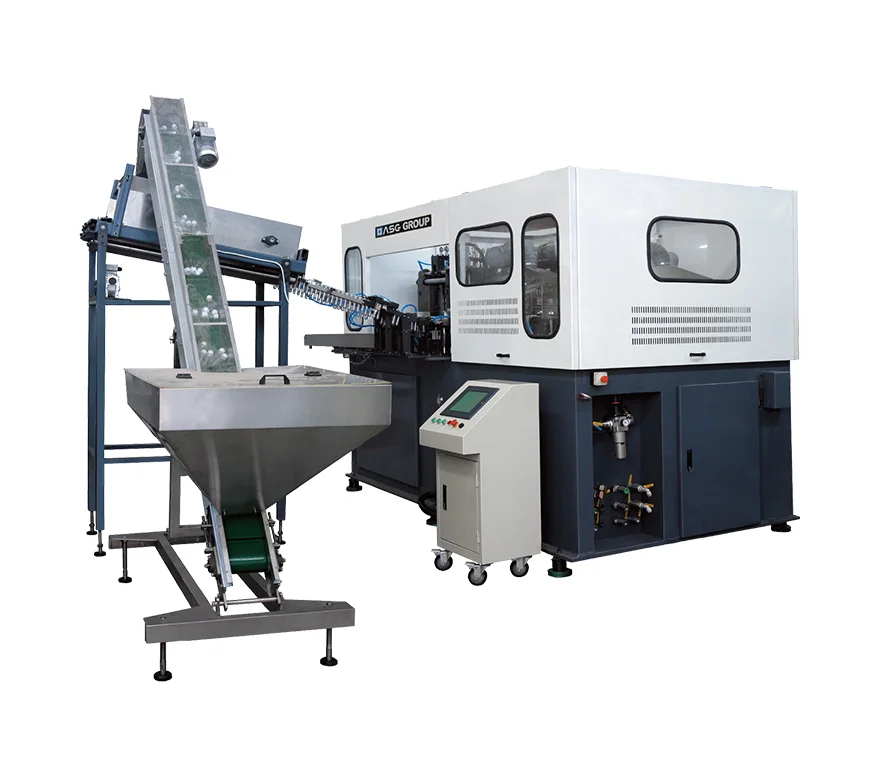

For a bottle blowing trial, agree how retained bottles will be linked to mould cavities and trial conditions before testing. Where the configuration uses several cavities, pooled results should not silently approve every position. Request a record showing the positions sampled, checks passed and conditions still untested.
Jiangsu ASG Packaging Machinery Group lists SY series linear bottle blowing equipment. Agree a sampling and acceptance plan for the quoted configuration. Ask the supplier how cavity identification will work in your trial rather than assuming an automatic traceability function is included.
Manufacturer source: ASG SY series linear bottle blowing machine
Create a cavity register for the quoted format
Request a register matching the proposed mould cavities to the bottle drawing and revision being tested. Identify the preform batch, material information and closure specification alongside that format. If several mould sets or bottle formats are included, keep their records separate so approval of one does not become approval of another.
Ask which identification can be read on the bottle, which information comes from a production record and where manual recording is needed. Agree a practical, safe method with the supplier. A number on a sample is useful only when its meaning and connection to the tested equipment are documented.
Keep sampling conditions attached to each bottle
Define the sampling location, trial stage, collection time and responsible person. Record the operating conditions the supplier agrees are relevant, plus any changes during the run. Keep start-up samples, samples from the agreed acceptance period and samples after adjustments distinguishable. Do not relabel them as one undifferentiated approved batch.
Agree the sample quantity and collection sequence for the project with the responsible quality team and supplier. Record any position or interval that cannot be sampled as planned. This checklist does not prescribe a universal sample size or prove long-run performance from a short demonstration.
Retain individual results before summarizing them
For each agreed cavity, link the sample identifiers to the required bottle checks and the assessment method. Depending on the application, ask which dimensional, appearance, closure-fit or other tests are required and who will perform them. Establish the acceptance criteria in advance; do not invent limits from the machine catalogue.
Keep the underlying results when reporting a range, average or pass rate. Mark missing, damaged or rejected samples and explain any exclusions. Ask whether every included cavity has met the agreed checks. A summary figure without the sample register cannot show which positions or conditions were actually assessed.
Document adjustments and the scope of repeat testing
If the trial requires an adjustment, identify when it happened, which samples preceded it and which followed it. Ask the supplier to record the affected equipment or settings at an appropriate level of detail. An earlier passing sample should not be presented as evidence for a different, untested final condition.
Agree which checks and cavity positions must be repeated after a change, and who approves that decision. Keep unresolved findings open with an owner and the next required evidence. These are questions for the acceptance plan, not instructions for an operator to adjust or access the machine during production.
Carry the sample register into acceptance documents
- Format record: bottle drawing revision, mould set, cavity register, preform batch and closure details.
- Collection record: sample identifiers, positions, times, trial stages and agreed operating conditions.
- Assessment record: agreed methods, individual results, exclusions and the person responsible for acceptance.
- Change record: adjustments, replacement samples, repeat checks and remaining untested conditions.
Send ASG the proposed format and acceptance records with your enquiry. Request confirmation of what identification, testing and documentation the quoted configuration includes. Retain the agreed reference samples and final signed record together, so the purchasing decision can be traced to the bottles and conditions actually assessed.
Review SY series linear bottle blowing equipment
Review rotary bottle blowing equipment